Your whole house fan needs somewhere to push the air. Understanding ventilation is the key to getting maximum performance from your cooling system.
Imagine your whole house fan is a faucet. When you turn it on, air flows into your attic, just like water flows into a sink. But that air has to go somewhere, or it backs up.
Your attic vents are the drain. If the drain is too small, the water backs up and the sink overflows. Same with air: if your attic vents can't handle the volume of air your fan is pushing, the system becomes less efficient.
When air can't escape freely, your fan:
The fix is simple: make sure your attic has enough ventilation for the air to escape. That's it. More ventilation = better performance.
Here's something most homeowners don't know: attic ventilation wasn't designed to cool your attic. It was designed to prevent moisture damage.
In humid climates, builders install plenty of venting to prevent condensation and mold. But Colorado is dry. Very dry. So builders here routinely skimp on attic ventilation because moisture damage isn't a concern.
The result? Most Colorado attics have only 2-3 square feet of ventilation, when a whole house fan needs 4-9 square feet to run at full efficiency.
This doesn't mean your fan won't work. It will. But it won't work as well as it could. It's like driving with the parking brake partially engaged. You'll still get where you're going, but you're not getting the full performance you paid for.
Adding ventilation is straightforward and relatively inexpensive. We can do it during your fan installation, or you can add it later. Either way, it's a one-time investment that improves performance for the life of the fan.
The gap is usually 3-6 additional vents.
For those who want the specific numbers. These requirements ensure optimal airflow and quiet operation.
| Fan Size | Speed | Window Area | Attic Ventilation |
|---|---|---|---|
| 30 Inch Fan | Low Speed | 4 sq ft minimum | 4 sq ft minimum |
| High Speed | 6 sq ft minimum | 6 sq ft minimum | |
| 36 Inch Fan | Low Speed | 5 sq ft minimum | 5 sq ft minimum |
| High Speed | 8 sq ft minimum | 8 sq ft minimum | |
| 42 Inch Fan | Low Speed | 6 sq ft minimum | 6 sq ft minimum |
| High Speed | 9 sq ft minimum | 9 sq ft minimum |
The open windows allow the fan to "breathe in" enough air. But all that air is ultimately going to be blown into the attic. That air must leave the attic to make room for more air coming in through the windows. Unless there is a window in the attic that you can open, you need to rely on roof vents to allow that air to flow back outdoors.
When measuring ventilation, what matters is the actual open hole, not the size of the vent cover. Many vents have screens, louvers, and other materials that reduce the true opening significantly. Some installers also do not cut the full hole size when installing vents.
Our standard: When we install vents, we cut a full one square foot opening per vent, ensuring you get the actual ventilation you are paying for. We measure real airflow, not vent dimensions.
Professional installation that lasts the life of your roof.
Superior airflow while keeping out weather and critters.
We cut a hole through the roof and install an aluminum roof cap, shaped like a mushroom, that keeps out critters, snow, and rain while allowing air to flow freely in and out.
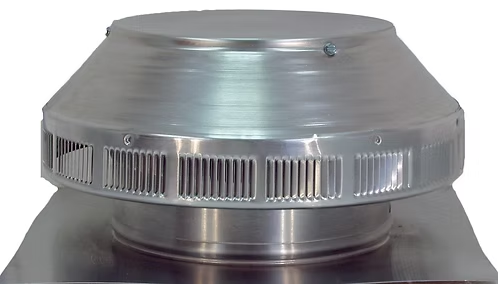
Whether the vents are on the ridge, the roof surface, or in the gables makes no difference. Only the total square footage of venting matters.
Let's put the numbers in perspective.
For standard composite shingle or wood shake roofs. Each vent provides a full one square foot of actual ventilation opening.
Most homes need 3 to 6 additional vents. This is a one time investment that lasts the life of your roof.
Concrete tile, metal roofs, slate, and other specialty roofing materials will have additional charges. These roofs require specialized techniques, additional time, and sometimes special materials to install vents properly without compromising the roof's integrity. We will provide a specific quote after assessing your roof.
We'll assess your attic's current ventilation and make our recommendations. Then you decide what's right for you.
We install additional vents during your fan installation. Most efficient since we're already on the roof.
Start with your existing ventilation. If you want more performance later, we can add vents anytime.
Any roofer can add ventilation. We're happy to tell you exactly what you need.
Your fan will work with existing venting. It just won't reach its full potential.
If you're investing in a whole house fan, adding proper ventilation during installation makes the most sense. You get maximum performance from day one, and the cost spread over the fan's 30+ year lifespan is negligible. But we'll never pressure you. We make our recommendation and you decide.
Yes. The fan will work with the ventilation you already have. However, it will work much better with adequate ventilation. More venting means more airflow, quieter operation, and better cooling performance.
No. Only the total square footage of venting matters. Whether the vents are on the ridge, roof surface, gables, or soffits makes no difference to the fan's performance.
Attic ventilation was designed to prevent moisture damage, not to cool attics. Since Colorado's dry climate doesn't have moisture problems, builders routinely install minimal ventilation.
We assess your attic's ventilation during our consultation. Most Colorado homes have 2-3 square feet when they need 4-9 square feet for optimal fan performance.
Not when installed properly. Our aluminum roof cap vents are designed for Colorado weather and are guaranteed for the life of your roof.
Absolutely. You can add venting at any time. However, it's most efficient to do it during fan installation since we're already working on your roof.
We're happy to assess your attic's current ventilation and give you an honest recommendation. No pressure, no sales tactics.