You're Buying Airflow
When you buy a whole house fan, you're really buying one thing: enough airflow to cool your house. Without sufficient airflow, the house won't cool quickly enough and you'll be disappointed. For proper cooling, you need a complete air exchange every 2 to 4 minutes.
What is CFM? CFM stands for Cubic Feet per Minute. It measures how much air a fan moves. A typical home needs 4,000 to 8,000 CFM to cool effectively. Higher CFM means faster cooling. Throughout this page, we compare fans by their CFM ratings.
Questions to Ask Before Buying Any Fan
Fan Comparison Chart
Side-by-side specifications. The numbers tell the story.
Belt Drive, 2-Speed Whole House Fan
The fan we install. Here's why.
Triangle Engineering
Belt Drive Fan
This is the best system currently available. Belt drive means a large blade can move lots of air (5,000 to 10,000+ CFM) yet do it quietly. Two-speed motors are readily available if replacement is ever needed, and the simple switches almost never fail.
Why We Recommend It
- Moves the most air of any fan type
- Large blades spin slowly = quiet
- Heavy duty, automotive-style bearings
- Standard parts available for decades
- Easy to repair if ever needed
- Proven technology since the 1950s
- Adds value when selling your home
Considerations
- Requires professional installation
- Needs ceiling opening (36"-48")
- Belt replacement every 10 to 20 years
The Bottom Line
Good engineering, simple construction, 30+ year lifespan, and parts that will be available well into the future. When you sell your home, you'll likely recoup most of your investment because the fan will still be running quietly and effectively.
Big Box Store Belt Drive Fan
Home Depot, Lowe's, etc. Looks similar. Isn't.

Even though this is technically a belt drive fan, we cannot recommend it. You get what you pay for: poor engineering, metal so thin you can bend it with your hand, bad information, no spare parts, and a very noisy shutter.
The Appeal
- Cheap upfront cost
- Easy to return
- Readily available
The Reality
- Very noisy operation
- Flimsy construction
- No spare parts available
- Store won't install it
- No one takes responsibility
- Often ends up on trash heap
The Bottom Line
Every summer we remove fans installed the year before because homeowners can't stand the noise or can't get repairs. Sometimes realtors tell sellers to "fix that horribly noisy fan or have it removed." The only fix is often complete replacement. You'll wish you had spent the money on a good one from the beginning.
Ducted Fan Systems (QuietCool, etc.)
Hangs from rafters with tubes to ceiling vents.

These fans move only 1,700 CFM per unit, nowhere near enough to qualify as a whole house fan. You'd need 3 to 4 of them for a modest home, costing $2,500 to $5,000+ without installation. The main selling point is that they're "quiet," but they're only quiet because they're hidden in the attic and barely moving air.
The Appeal
- Marketed as "quiet"
- Smaller ceiling vents
- Insulated housing
The Reality
- Doesn't move enough air
- Need multiple units = $$$
- Exotic parts, hard to service
- Will parts exist in 10 years?
- Small fans spin fast = still noisy
- Fancy marketing, poor value
The Bottom Line
With our fan, you can whisper to someone while standing under a full-size 30" fan running on low speed, moving over 5,000 CFM. These fans solve a noise problem that doesn't exist with properly installed belt-drive fans. And the extra cash in your wallet wouldn't be a bad thing either.
Attic Hatch Fan / "Easy Install" Fans
Designed to fit in existing attic access opening.
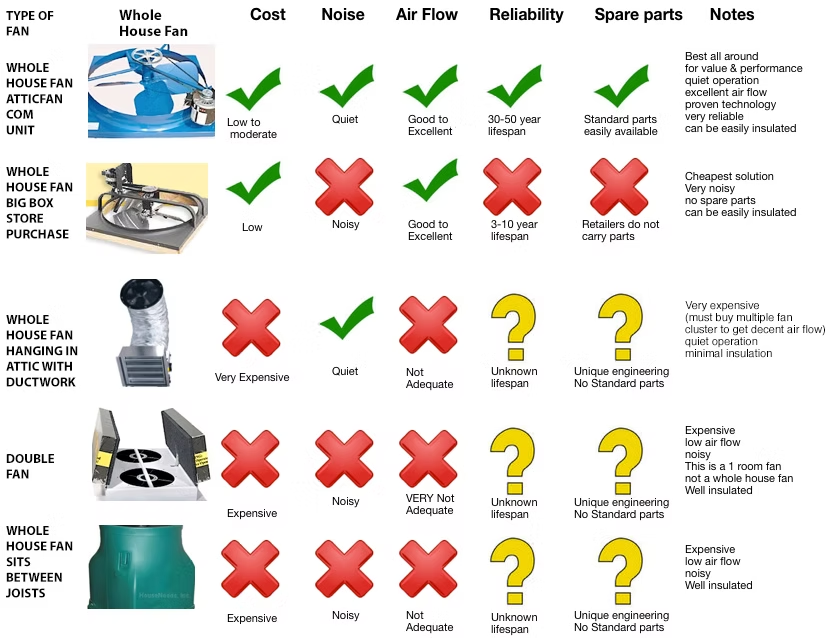
This odd-looking fan attempts to make everything seem easy by fitting into an existing attic entry hatchway. For over $1,200 (without installation) it moves only 2,800 CFM on high, 1,650 CFM on low. That means you'd need 2 to 4 of these in most homes.
The Appeal
- Easier installation concept
- Uses existing opening
- Marketed as innovative
The Reality
- Way too little airflow
- Extremely expensive per CFM
- Over-engineered, under-effective
- Only quiet because it barely works
The Bottom Line
A better idea if you want the effect but don't want to spend the money: Buy a $20 box fan and put it in your attic entry hatch for the summer. It will sound just as quiet on low and move about as much air. We're serious.
Attic Exhaust Fan (Power Vent)
Roof or gable mounted. Cools attic only, not your home.
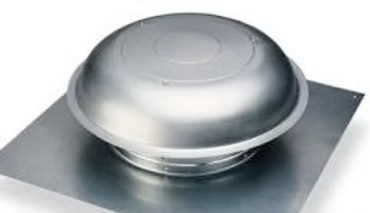
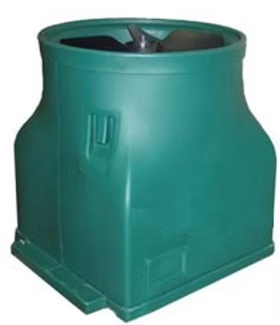
The attic exhaust fan is inexpensive ($90 to $500) and moves about 1,200 CFM. Unlike the others above, it doesn't pretend to be a whole house fan. It only removes hot air from the attic and does not pull air through your house. It turns on automatically via thermostat.
Good For
- Reducing AC costs slightly
- Single-story homes with AC
- Automatic operation
- Very low operating cost
- Adds 1 sq ft ventilation
Limitations
- Does NOT cool your living space
- No breeze through house
- Maybe 5°F room reduction
- Not effective as only cooling
The Bottom Line
This is a legitimate product for its intended purpose: reducing attic heat to help your AC work more efficiently. But it is NOT a whole house fan and will NOT cool your home by itself. If you want to cool your living space, create airflow, or significantly reduce AC use, you need an actual whole house fan.
Solar Attic Fan
Solar-powered attic exhaust. Sounds great. Isn't.
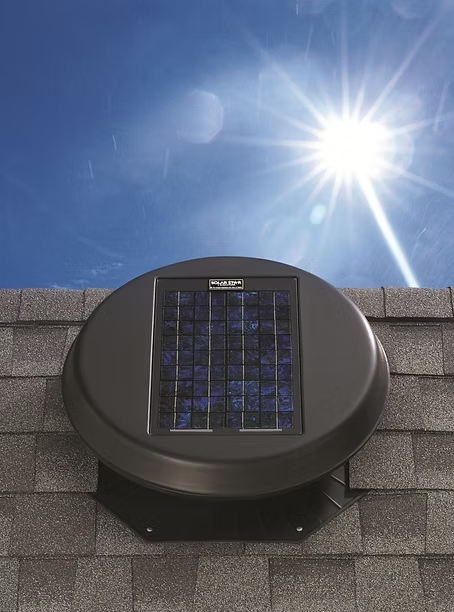
Solar attic fans are expensive ($300 to $800) and move very little air, about half that of a standard electric exhaust fan. They only run when the sun shines, slow down during cloudy periods, and don't run at night. The primary benefit is psychological: making homeowners feel good about "going solar."
The Appeal
- No wiring needed
- Zero operating cost
- Feels environmentally good
The Reality
- Moves half the air of electric
- Stops when you need it (at night)
- Slows on cloudy days
- Electric fan costs only $5 to $10/year
- No solar whole house fans exist
- Mostly psychological benefit
The Bottom Line
A standard electric attic exhaust fan costs only $5 to $10 per year to operate. The solar version costs 4 to 8x more upfront, moves half the air, and doesn't run when you need cooling most (evenings and night). Also: with modern insulation (8 to 16 inches), attic heat rarely penetrates to affect room temperature significantly. If you want to actually cool your home, you need a whole house fan, not any type of attic exhaust fan.