One Fan. Whole House Cooling.

A whole house fan is mounted in your ceiling, usually in a central hallway. When turned on with windows open, it creates a powerful exchange of air throughout your entire home.

Hot Day 🔥 HOT ATTIC (120°F+) BASEMENT (Cool Air Source) FAN COOL AIR IN COOL AIR IN HOT AIR EXHAUSTS OUT Window Open Window Open LIVING SPACE Cool air in Hot air out

Cool outside air enters through open windows, flows through your living space, gets pulled up through the fan, and pushes hot attic air out through roof vents. If you have a basement, that is your coolest air source.

Windows Must Be Open

This is the single most important thing to understand. The fan cannot cool your home without open windows.

⚠️ Never Run the Fan with Windows Closed

Running the fan without open windows creates a vacuum effect. The fan will struggle, run louder, move less air, and won't cool your home. Always open windows before turning on the fan.

How Much Window Area Do You Need?

The total open window area should roughly equal the size of the fan's ceiling shutter.

Fan Size Shutter Size Window Area Needed
30 Inch Fan 36" × 36" ~9 sq ft (2-3 windows)
36 Inch Fan 42" × 42" ~12 sq ft (3-4 windows)
42 Inch Fan 48" × 48" ~16 sq ft (4-5 windows)

A typical double-hung window opened halfway provides about 3-4 sq ft of opening.

Where to Open Windows

🛏️

Cool Bedrooms

Open bedroom windows, close others. Air flows directly through.

🏠

Whole House

Open windows throughout for even airflow everywhere.

🏚️

Have a Basement?

Open basement windows for coolest air (10-15°F cooler).

🏡

No Basement?

Open shaded side or north-facing windows.

💡 Pro Tip: Control the Breeze Strength

Opening more windows than needed creates a gentler, distributed breeze. Opening fewer windows (but still enough) creates a stronger breeze through those specific areas. Use this to direct airflow where you want it most.

How to Use Your Fan

Whether you're new to whole house fans or need a refresher, here's the process for best results.

1

Check the Outside Temperature

The fan works when outside air is cooler than inside air. In Colorado summers, this is typically after 6-7pm. The bigger the temperature difference, the faster your home cools.

2

Open Windows First

Before turning on the fan, open windows equal to or greater than the shutter size. Start with windows in the areas you want to cool most, or in the coolest areas of your home (basement, shaded side).

3

Turn On the Fan

Use the wall switch or timer. Start on high speed to quickly flush out hot air, then switch to low speed for quiet overnight operation. You'll feel the breeze immediately.

4

Let It Run Overnight

For best results, run the fan from evening until early morning (8pm to 6am is typical). Set the timer so it shuts off automatically. The longer it runs, the more heat it pulls from your walls and furniture.

5

Close Up in the Morning

Before the day heats up (by 7-8am), close all windows. Your home is now pre-cooled. The cooled walls, floors, and furniture will keep your home comfortable well into the afternoon.

Why Overnight Running Makes All the Difference

Here's what most people don't realize: running your fan overnight doesn't just cool the air. It cools everything in your home.

Your walls, floors, furniture, and ceilings absorb heat during the day. That stored heat radiates back into your living space, making your home feel hot even after the air temperature drops.

When you run the fan overnight, cool air flows over all these surfaces for hours. The stored heat transfers to the moving air and gets exhausted outside. By morning, everything in your home is cool to the touch.

This "thermal mass" has roughly a 12-hour lag. Pre-cool it overnight, and it stays cool well into the afternoon, even as outside temperatures climb. Most homeowners find their homes stay comfortable until 2-4pm without any additional cooling.

💡 Short Run vs. Overnight Run

Running the fan for just an hour cools the air but not the thermal mass. Running it all night cools everything, giving you lasting comfort the next day. The overnight run is where the real magic happens.
The 24-Hour Cycle

🌅
6-8 PM
Outside cools. Open windows, turn on fan.
🌙
Overnight
Fan runs on low. Home and thermal mass cool.
🌄
6-7 AM
Timer shuts off fan. Close windows.
☀️
Morning to Afternoon
Home stays cool from thermal mass.
🌡️
2-5 PM (Hottest)
AC if needed, or wait for evening cycle.

Getting the Best Results

🔊

Use the Right Speed

High speed: Use when first turning on to quickly flush hot air.

Low speed: Use overnight for quiet operation. Still very effective.

Use the Timer

Set the timer to shut off around 6am. This ensures full overnight cooling without waking up to turn it off or close windows.

🪟

Screens Are Fine

Leave window screens in place. They do not significantly reduce airflow and they keep bugs out. No need to remove them.

🚪

Open Interior Doors

For whole-house cooling, keep interior doors open so air flows freely. Close doors only to exclude specific areas.

❄️

Don't Mix with AC

Never run the fan and AC simultaneously. The fan exhausts air you just paid to cool. Use one or the other.

🍳

Clear Odors Fast

Cooking smells, paint fumes, stale air? Run the fan 10-15 minutes to completely exchange the air. Works any season.

Works in Every Home

🏚️ Homes with Basements

Your secret weapon: basement air is naturally 10-15°F cooler. Pull this cool air upward through your home.

  • Open basement windows for coolest air
  • Keep basement door open for airflow
  • Cool air rises through stairwells
  • Even unfinished basements work great

🏡 Homes without Basements

No basement? No problem. Ground floor windows work beautifully.

  • Open windows on the shaded side
  • North-facing windows often coolest
  • Lower windows pull cooler air
  • Perfect for ranch and single-story homes

🏠 Two-Story and Multi-Level Homes

Whole house fans are especially effective in multi-story homes where heat accumulates upstairs. The fan is installed on the top floor, pulling cool air up from below.

  • Hot upper floors finally get relief
  • Cool air naturally rises to meet the fan
  • Open windows on multiple floors
  • Works with vaulted ceilings and open floor plans

Allergies & Air Quality

Questions we hear from customers who want to make sure a whole house fan is right for them.

🤧

What About Allergies?

Many customers have been apprehensive about installing a whole house fan, thinking it will increase their allergy suffering. To date, we haven't been able to establish whether fans make allergies worse or better. We welcome reports of any experience you might have.

💡 A Common Sense Approach

Purchase paper furnace filters and cut them to fit several windows. Run the fan with filters in place to remove most common allergens. Remember to open more windows to make up for the airflow restriction caused by the filters.

🌬️

Indoor Air Quality & Radon

Here's something most people don't realize: the air inside your home is usually far more polluted than outside air. Using the fan actually reduces indoor pollution significantly.

For homes with radon concerns, the large amounts of air flushing through the basement helps mitigate radon concentrations.

Year-round use: Run the fan even in winter for short periods without significantly affecting heating bills. Great for flushing out paint fumes, cleaning chemicals, or when you've burned the toast.

Quick Reference Guide

Save this page for easy reference after your fan is installed.

When to Run

When outside is cooler than inside (after 6-7pm in summer)

How Long to Run

All night for best results (8pm to 6am)

Window Area Needed

Equal to or greater than the shutter size

Best Speed

High to start, low overnight

Morning Routine

Close all windows before it heats up

Never Do This

Run with windows closed or with AC on

Inside Your Home and Attic

Here is what a whole house fan installation actually looks like.

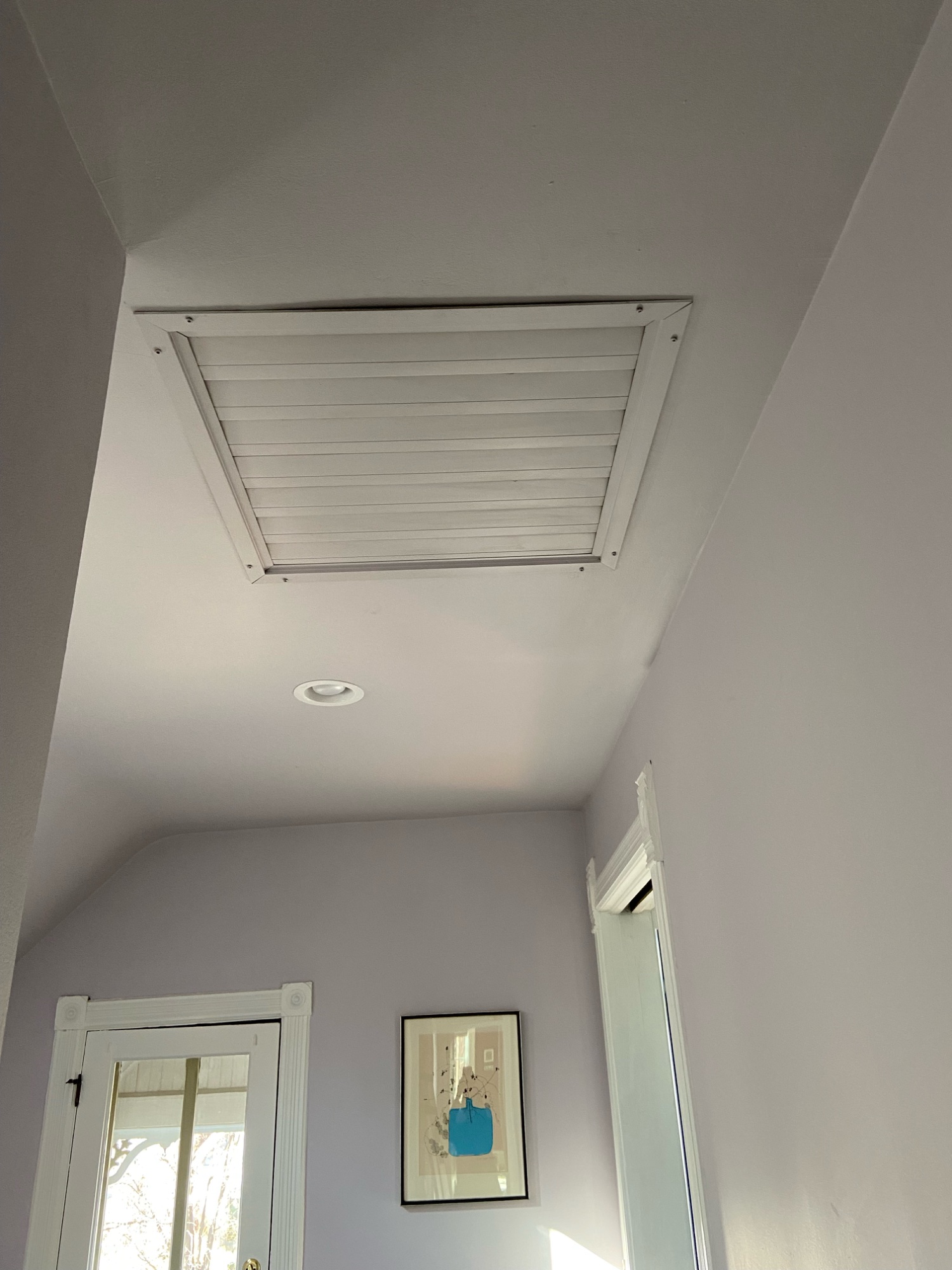
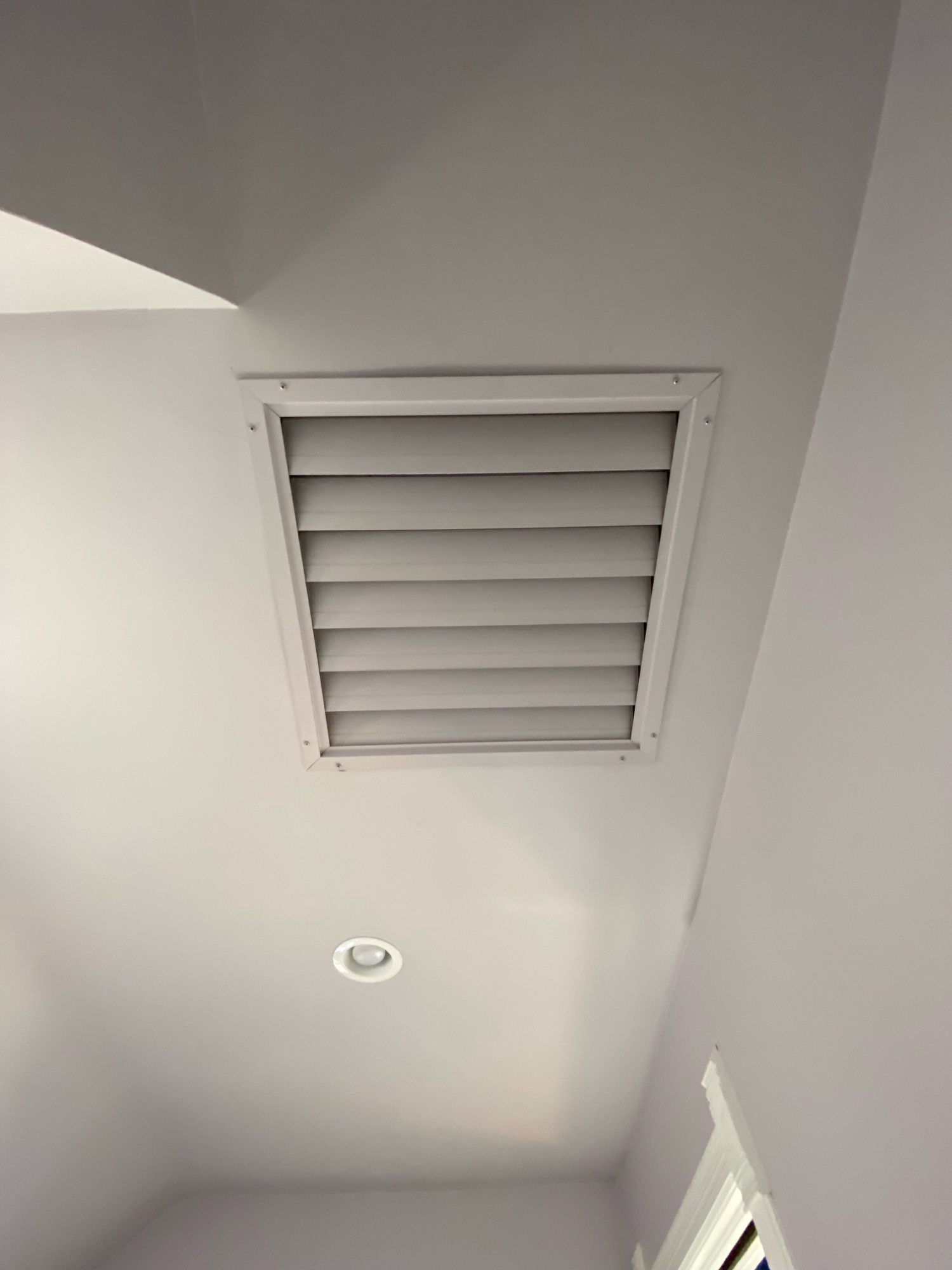
The Ceiling Shutter

Whole house fan shutter closed

Shutter Closed

When the fan is off

Whole house fan shutter open

Shutter Open

When the fan is running

Clean, simple, and unobtrusive. The shutter opens automatically when the fan runs and closes when it is off.

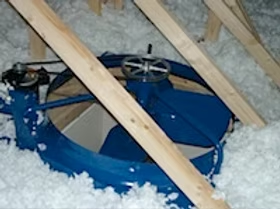
Whole house fan installed in attic

The Fan in Your Attic

The fan unit sits in your attic, mounted on a sturdy frame with rubber isolation to prevent vibration and noise.

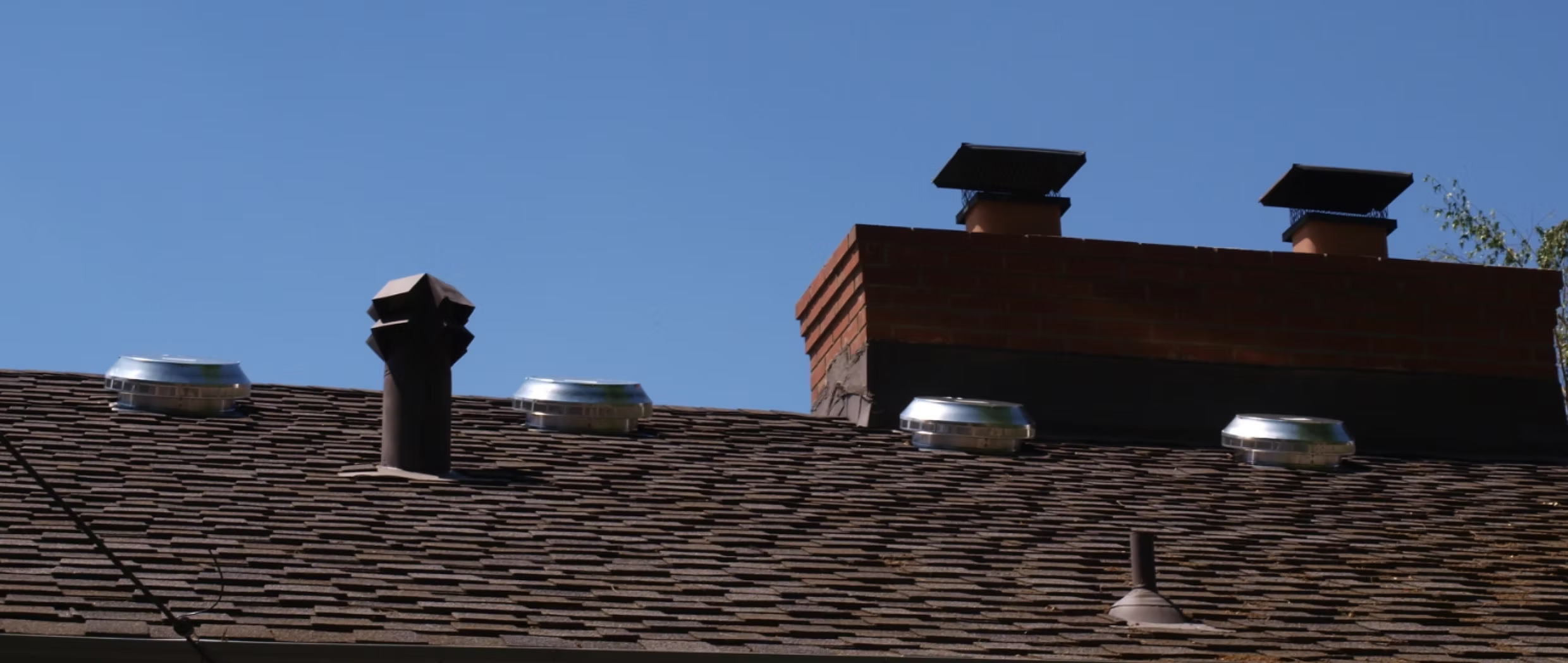
Roof vents installed for whole house fan ventilation

Roof Ventilation

Proper attic ventilation is essential. We install aluminum roof cap vents that allow the hot air to escape efficiently.

Watch an Actual Installation

Our founder walks you through a real whole house fan installation in a Denver home. See exactly what the process looks like from start to finish.

Nearly 50 years of experience, installed with care in your home.

Questions? We're Here to Help.

Whether you're considering a fan or already have one installed, we're happy to answer any questions about getting the best results.

Call Text